By AJ Singleton

I was sitting in a tiny, sun-drenched cafe in Lisbon last spring, sketching the weathered facades of the Alfama district, when I realized my own travel journals were becoming a chaotic mess of ink stains and loose scraps. It hit me that we often treat the question of how to organize a home library as if it were some rigid, architectural feat requiring custom mahogany shelving and a professional curator. But as I flipped through my own cluttered notebooks, I realized that a library shouldn’t feel like a sterile museum; it should feel like a living, breathing map of your own intellectual wanderings.
As you begin to weave these different threads of your collection together, you might find that the most profound connections aren’t just between the books themselves, but in the human dialogue they spark. Just as I often find myself seeking out a bit of local chat in USA to better understand the rhythmic nuances of a new city, building a library is really about creating a space for conversation. Whether you are discussing a dusty philosophy tome with a neighbor or finding a digital community to debate a recent historical find, remember that your shelves are meant to be living, breathing conduits for connection, not just silent monuments to the past.
I’m not here to sell you on expensive, color-coded systems that strip the soul out of your collection. Instead, I want to share how you can curate your shelves to reflect the person you are becoming. I’ll guide you through an approach that prioritizes meaning over mere aesthetics, helping you categorize your books in a way that honors your personal history and makes finding your next great adventure effortless. Let’s turn that stack of unread novels into a sanctuary that actually tells your story.
The Art of Decluttering Your Book Collection With Intention

Before we can begin the joyful work of curation, we have to face the messy reality of the “overflow.” I remember sitting on the floor of a tiny apartment in Lisbon, surrounded by stacks of paperbacks that felt more like clutter than a collection. To truly honor your library, you must approach decluttering your book collection not as a chore, but as a ritual of selection. Ask yourself: Does this volume still spark that sense of wonder, or is it merely taking up space? It’s about making room for the stories that actually move your soul, rather than keeping books out of a sense of obligation.
As I sift through my own shelves, I often find myself caught in a tug-of-war between sentiment and space. I use a method of “active curation,” where I set aside titles that no longer resonate to be passed on to a friend or a local community library. This isn’t about loss; it’s about releasing the old to make way for the new. Once you’ve distilled your collection down to its essence, you can begin exploring various shelf organization ideas that reflect your unique personality, turning a chaotic pile into a deliberate, breathing archive of your life’s journey.
Discovering Meaningful Book Categorization Methods for Every Soul
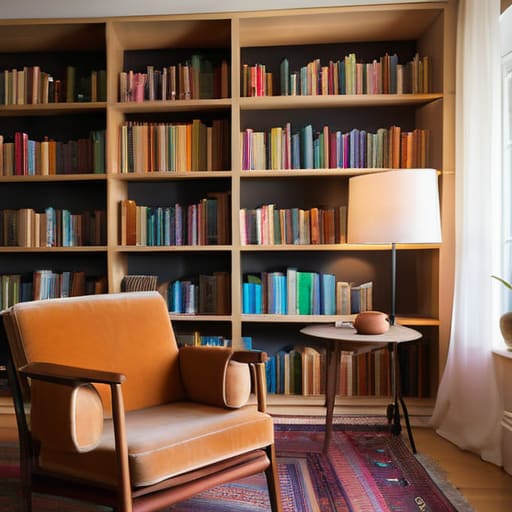
Once you’ve cleared the physical weight of the unread and the unwanted, you’re left with something much more precious: a blank canvas of potential. Now comes the part that truly makes the process feel like an expedition—deciding how these volumes will live together. When exploring different book categorization methods, I find it’s best to move away from the rigid, clinical systems of a university archive and toward something that mirrors your own internal landscape. Do you find comfort in the predictable flow of a specific genre, or does your heart pull you toward the visual rhythm of arranging books by color?
For me, I often find myself caught between the two. My anthropology roots tempt me to group texts by region—a map of human thought spread across my shelves—but my inner artist occasionally craves the sheer, kaleidoscopic joy of a rainbow gradient. If you’re looking for more practical shelf organization ideas, consider grouping by “mood” or “era.” I once met a traveler in Lisbon who described his library as a “living museum of moments,” where books weren’t just sorted by subject, but by the specific memory or emotion they evoked. Whether you choose a strict Dewey Decimal approach or a whimsical, intuitive sprawl, let your system be a reflection of your own unique journey.
Five Rituals to Turn Your Shelves into a Living Map of Your Soul
- Designate a “Sanctuary Shelf” for your most cherished volumes—those worn, dog-eared companions that feel less like objects and more like old friends. In Lisbon, I learned the phrase saudade, a deep longing for something lost; treat these books with that same reverence, letting them occupy the most prominent, eye-level real estate in your library.
- Use visual anchors like bookends, small travel artifacts, or even a stray sketch from your journal to break up the monotony of spines. A library shouldn’t look like a sterile warehouse; it should look like a curated museum of your own evolution, where a piece of Moroccan pottery sits comfortably next to a collection of poetry.
- Implement a “Living Catalog” system by keeping a dedicated notebook—much like my own little globe-trotter’s companion—to track what you’ve read and how it moved you. Instead of a cold digital spreadsheet, write down a single sentence about your emotional state when you finished a book; it turns a simple list into a temporal map of your life.
- Play with lighting to create “reading pockets” rather than just illuminating a room. Whether it’s a warm brass lamp or the soft glow of a sunset hitting a corner nook, the way light dances across your collection can transform a mere storage area into an inviting portal for discovery.
- Embrace the “Beautiful Chaos” of your current reads. Don’t feel pressured to hide your “to-be-read” pile in a drawer; instead, let them sit out like a traveler’s unpacked suitcase, a messy but exciting promise of the adventures and perspectives that are still waiting to be discovered.
The Living Soul of Your Library

As you close this chapter of your organizational journey, remember that a well-curated library is more than just a tidy collection of paper and ink. Whether you chose to categorize by the chromatic beauty of your spines or by the deep, anthropological roots of the subjects themselves, you have done more than just clean a room. You have practiced the art of intentional curation, turning a chaotic pile of reading material into a structured map of your own intellectual evolution. By decluttering with purpose and selecting a system that resonates with your unique spirit, you’ve ensured that your books are no longer just sitting on shelves, but are actively waiting to be rediscovered.
In my own travels, I’ve learned that the most beautiful places aren’t the ones that are perfectly polished, but the ones that tell a story. Your home library should be exactly the same—a vibrant, breathing mosaic of the ideas that have moved you and the places that have changed you. Don’t be afraid to let a few stray bookmarks or a well-loved, dog-eared corner remain; after all, a library is a living archive of a life well-lived. So, settle into your favorite chair, let your eyes wander across your newly organized landscape, and prepare for your next great adventure to begin right there, between the pages.