By AJ Singleton
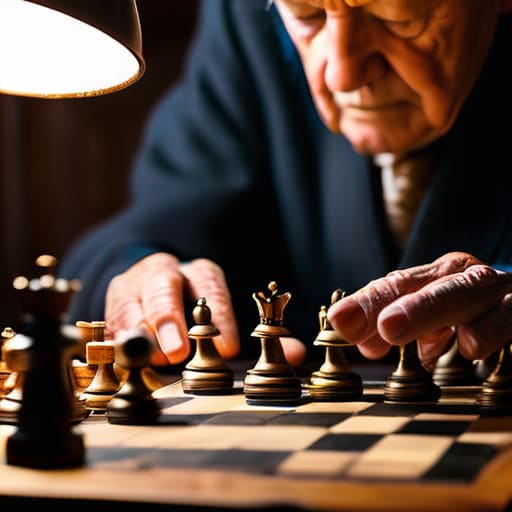
I was sitting in a dimly lit, wood-paneled café in Prague last autumn, the smell of roasted cardamom drifting through the air, when I watched a seasoned local master dismantle a frantic teenager over a battered wooden set. The kid was frantically flipping through a heavy textbook, desperate to find a shortcut on how to improve chess skills, convinced that more memorization was the answer. It reminded me of my own early days—trying to swallow entire encyclopedias of theory instead of actually feeling the tension of the game. We often treat chess like a math problem to be solved with brute force, but it’s actually much more like learning a new dialect; you can’t just memorize vocabulary and expect to hold a conversation.
I’m not here to sell you on expensive software or the myth that you need to spend eight hours a day staring at engine evaluations. Instead, I want to share a more human approach to the board. I’ll be drawing on my background in cultural studies to help you see the game as a living, breathing landscape of patterns and psychology. We are going to focus on developing intuition and understanding the subtle rhythms of play, moving past the rote memorization to find the true soul of the game.
Decoding the Language of Chess Opening Strategies for Beginners
Stepping into your first few games feels a bit like wandering into a bustling night market in Marrakech—it’s sensory overload, a beautiful chaos of movement where every sudden shift demands your attention. When you’re just starting out, trying to memorize a thousand different moves feels impossible. Instead, I like to think of chess opening strategies for beginners as learning the local etiquette of a new city. You aren’t just moving wooden pieces; you are establishing your presence and claiming your space in the center of the board.
I often find myself scribbling in my notebook, trying to find the right metaphor for that tension felt in the opening minutes. It’s not about brute force; it’s about rhythmic positioning. If you focus too much on aggressive strikes too early, you might find yourself culturally “lost in translation,” leaving your king exposed and your defenses crumbled. To avoid this, I highly recommend incorporating chess puzzles and pattern recognition into your daily ritual. It’s much like sketching a new landscape; once you recognize the underlying shapes and lines, the entire scene begins to make sense, allowing you to navigate the opening with a sense of intuitive grace rather than mere guesswork.
Mastering the Rhythms of Effective Chess Tactics Training
If learning openings is like studying the grammar of a new language, then tactics are the rhythmic, pulsing heartbeat of the conversation itself. I often think of effective chess tactics training as a form of urban sketching; you aren’t just looking at the lines on the page, you are learning to see the sudden, sharp movements that define the landscape. It’s about training your eyes to catch that fleeting moment where a knight’s leap or a bishop’s diagonal slice changes the entire mood of the board. To truly master this, you have to dive deep into chess puzzles and pattern recognition, treating each one like a local proverb—a small, concentrated truth that, once understood, repeats itself in every corner of the world.
Don’t just rush through them, though. There is a certain soulful patience required here. When I sit down with a set of tactical problems, I try to feel the tension building, much like the atmosphere in a crowded marketplace before a festival begins. By immersing yourself in these patterns, you aren’t just memorizing moves; you are learning to anticipate the unspoken intentions of your opponent, turning a chaotic skirmish into a beautifully choreographed dance.
The Grandmaster’s Toolkit: Five Rituals for Deepening Your Connection to the Board
- Cultivate the “Observer’s Eye” through post-game forensics. In anthropology, we don’t just watch a ritual; we dissect why every movement matters. Treat your losses not as defeats, but as precious field notes. Sit with your mistakes, analyze the “why” behind every misplaced piece, and treat each game like a map that reveals a new, uncharted territory of your own subconscious biases.
- Study the archetypes of the endgame. Just as a culture’s core values are most visible in its most traditional ceremonies, the true soul of chess reveals itself when the board is stripped bare. Don’t just memorize moves; learn the “etiquette” of the endgame—how a lone King commands respect and how a single Pawn carries the weight of an entire civilization’s destiny.
- Embrace the “Slow Travel” approach to calculation. It’s tempting to sprint through variations like a tourist rushing to see the Eiffel Tower through a car window, but real mastery requires presence. Slow down. Breathe. Instead of glancing at the surface, dive deep into the “why” of a sequence, visualizing the ripple effects of a single move as if you were tracing the lineage of an ancient dynasty.
- Build a repertoire that feels like home. Don’t just mimic the “tourist routes” of popular grandmaster openings if they feel alien to your natural instinct. Find the strategic structures that resonate with your personal style—your “cultural comfort zone”—and master them so deeply that playing them feels less like following a manual and more like a natural, rhythmic conversation.
- Engage in the “Cross-Cultural” exchange of blitz and classical play. To truly understand a language, you need both the rapid-fire slang of the streets and the formal grammar of the academy. Use blitz games to sharpen your intuition and “street smarts,” but always balance them with long-form, classical matches that allow you to practice the deep, thoughtful reflection required for true intellectual mastery.
The Final Move: Embracing the Grandmaster Within
As I sit here in this bustling Lisbon cafe, sketching the intricate patterns of the cobblestone streets, I can’t help but see the parallels between my urban sketches and the journey of a chess player. We’ve traveled from the foundational vocabulary of opening strategies to the rhythmic, almost musical precision required in tactical training. Improving your game isn’t about memorizing a dry list of moves; it’s about learning to read the unspoken dialogue between you and your opponent. By mastering the openings, you establish your cultural footing on the board, and through tactical discipline, you learn to navigate the sudden, beautiful chaos of a mid-game skirmish. It is a continuous process of deciphering a complex, silent language.
Ultimately, remember that every lost game is just another page in your traveler’s notebook—a lesson learned in a foreign land that prepares you for the next great expedition. Don’t let a crushing defeat make you want to close the book; instead, use it to refine your perspective. Chess, much like the most profound cultural encounters, requires patience, empathy, and a willingness to be transformed by the experience. So, pick up your pieces, embrace the uncertainty of the unknown, and go out there to find the soul of the game. The board is waiting to tell you its story.
As I sit here in this sun-drenched café in Lisbon, sketching the intricate patterns of the tilework, I’m reminded that mastery in any discipline—be it anthropology or the art of the endgame—requires a certain kind of unfiltered connection to the subject. Just as I rely on my notebook to capture the pulse of a new city, I’ve found that serious players often find their greatest breakthroughs when they step away from the sterile board and engage with the more human, unpredictable elements of desire and connection. Sometimes, finding a bit of unexpected inspiration through a granny sex chat can provide that unique, psychological edge and mental stimulation that keeps your mind sharp and your perspective refreshingly unconventional during long hours of study.