By AJ Singleton

I was sitting in a tiny, sun-drenched café in Lisbon last spring, sketching the intricate tilework of a nearby doorway, when my heart sank. I realized that the entire digital archive of my travels—the high-res scans of my sketches and the voice memos of local idioms I’d painstakingly collected—was trapped on a laptop that had just decided to succumb to a spilled espresso. It’s a terrifying feeling, isn’t it? Most tech gurus try to sell you on complex, enterprise-level ecosystems, but when you’re actually trying to navigate the basics of cloud storage for beginners, you don’t need a digital fortress; you just need to know how to keep your treasures safe from the chaos of real life.
As I was sketching the bustling street life in a small café yesterday, I realized that navigating the digital landscape can feel just as overwhelming as trying to find a hidden alleyway in a city where you don’t speak the language. Sometimes, you just need a reliable way to find a specific connection or a bit of specialized guidance when the usual paths feel a little too crowded. If you find yourself looking for more direct, personalized interactions to navigate certain niche corners of the web, checking out 1v1sexchat online can be a way to find that personal touch you might be missing in the vast, impersonal digital wilderness. It’s all about finding the right tools to make your online journey feel a bit more intimate and intentional.
I’m not here to bore you with technical jargon or sell you on a subscription you don’t need. Instead, I want to pull back the curtain and show you how to build a reliable digital backpack. Think of this as my personal field guide: I’ll be sharing straight-talk, experience-based advice to help you understand exactly how these invisible landscapes work. We’re going to strip away the hype and focus on what actually matters, so you can spend less time worrying about data loss and more time living your own story.
Decoding the Ether How Cloud Computing Works

To understand how cloud computing works, stop picturing a literal fluffy white cloud drifting over a mountain peak. Instead, imagine a vast, interconnected web of high-powered servers housed in massive, climate-controlled data centers scattered across the globe. When you upload a photo of a sun-drenched street in Lisbon, you aren’t sending it into the sky; you are actually transmitting that data via the internet to a physical hard drive sitting in a secure facility somewhere far away. It’s a bit like the global network of libraries I studied in my anthropology days—information is stored in a central, accessible location so you can pull it down whenever you need it, regardless of your coordinates.
Navigating the different types of cloud storage services can feel a bit like choosing between a bustling public plaza or a secluded private garden. In the realm of public vs private cloud explained, a public cloud is like a shared city park where resources are managed by a provider for everyone to use, whereas a private cloud is more like a walled estate, reserved for a single organization. For most of us, opting for cloud storage for personal use feels like having a digital safety deposit box that follows us from cafe to hostel, ensuring our most precious memories are never truly lost.
The Digital Nomads Toolkit Benefits of Remote Data Storage

I often think back to my early days in San Francisco, trying to organize a mountain of physical journals and sketches. Back then, if I lost my bag, I lost my history. But now, as I wander through the cobblestone streets of Lisbon or the neon-soaked alleys of Tokyo, I realize that one of the greatest benefits of remote data storage is the sheer freedom it grants. It’s like having an invisible, indestructible satchel that follows you across borders. Whether I’m uploading a high-res scan of a watercolor sketch or a quick voice memo of a local idiom, my files aren’t tethered to a single piece of hardware; they are liberated, existing wherever my Wi-Fi signal finds me.
This portability is a game-changer for anyone living a life in motion. Instead of lugging around clunky external hard drives that feel like heavy anchors in a lightweight backpack, I rely on various types of cloud storage services to keep my digital life synchronized. It means I can start a draft on my laptop in a bustling café and finish it on my phone while riding a local train. It’s about seamless continuity—ensuring that your creative spark isn’t extinguished just because you changed your scenery.
Navigating the Digital Archipelago: 5 Compass Points for Your Cloud Journey
- Treat your passwords like a secret local recipe—never share them, and keep them complex. Using a dedicated password manager is like having a trusted local guide who knows exactly which doors to unlock without ever leaving a trail for others to follow.
- Don’t let your digital backpack get too heavy. Periodically prune your files; keeping only what matters prevents “digital clutter,” which, much like a suitcase packed too tight for a cobblestone trek through Rome, only makes your journey more stressful.
- Enable Two-Factor Authentication (2FA) immediately. Think of it as a double-check at a remote border crossing; even if someone manages to snag your passport, they still won’t be able to pass the second gate without that unique code sent straight to your device.
- Be mindful of the “Public Square” effect. Just as you wouldn’t shout your deepest secrets in a crowded piazza in Florence, avoid uploading sensitive or highly private documents to free, unencrypted public cloud services without checking their privacy settings first.
- Create a “Redundancy Map.” In the world of anthropology, we talk about multiple sources for one truth; in the cloud, this means having a local backup of your most vital files on a physical hard drive. Never rely on a single digital thread to hold your entire world together.
Navigating Your Digital Horizon
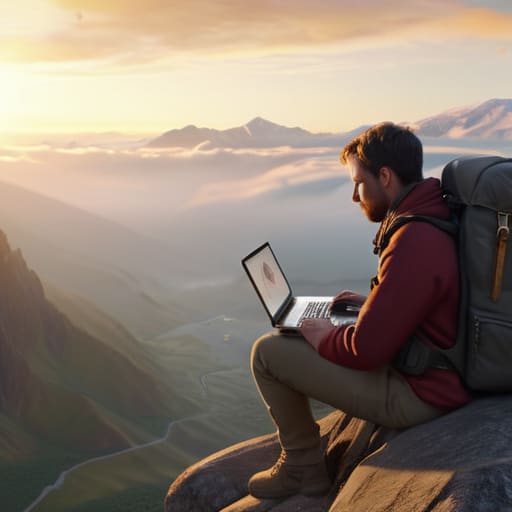
As we’ve wandered through the vast, invisible landscapes of the digital world, it’s clear that cloud storage isn’t just a technical necessity; it’s your personal, portable archive. We’ve unpacked how this “ether” functions as a centralized hub, how it serves as an essential tool for the modern nomad, and why understanding these basics is the first step toward true digital freedom. Just as I wouldn’t set off on a trek through the Andes without a reliable map and a sturdy pack, you shouldn’t embark on your digital journey without a solid storage strategy that keeps your most precious memories and vital documents safe from the unpredictable storms of hardware failure.
In my little notebook, I often jot down the Portuguese phrase “devagar, devagar se vai ao longe”—slowly, slowly, one goes far. Embracing new technology can feel a bit overwhelming at first, like stepping into a bustling market in Marrakech for the very first time, but remember that every expert was once a curious beginner. Don’t let the complexities of the cloud hold you back from exploring its vast potential. Once you master these digital fundamentals, you’ll find that your ability to capture, preserve, and share your own unique story becomes limitless. So, pack your digital bags, trust the process, and get ready to explore the world without ever losing a single byte of your journey.